A Look at Chinese Higher Education Rankings

When ranked this way, the Chinese universities are barely even on the list.

A Look at Chinese Higher Education Rankings
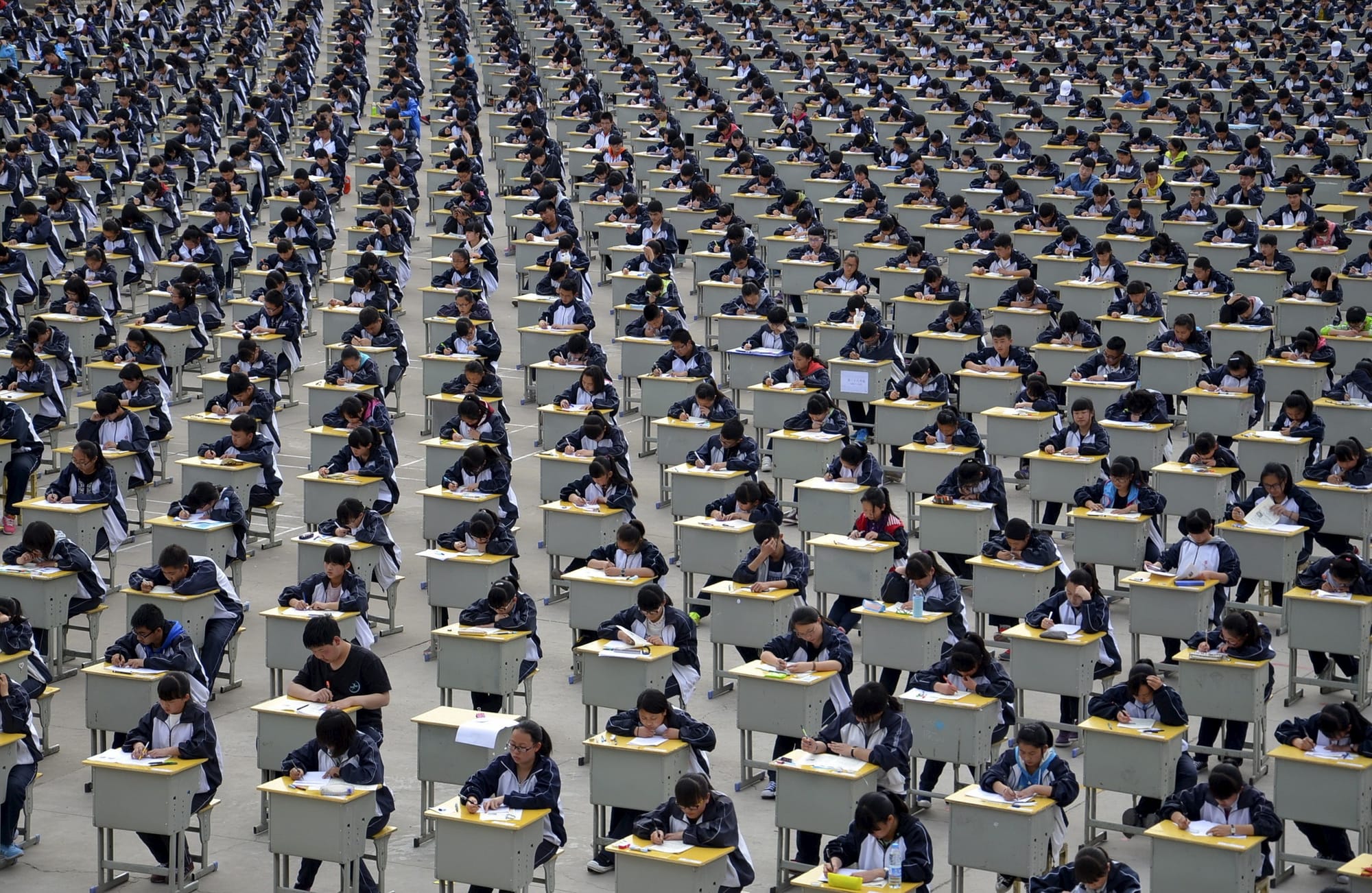
from Reuters

It seems as though the New York Times has made it a goal to slowly chip away at the image of the United States, so long as the President Trump remains in office. A recent article of theirs, which draws from a ranking system with a particular focus on publications, states that “The reordering comes as the Trump administration has been slashing research funding to American schools that depend heavily on the federal government to pay for scientific endeavors.” The article even discusses how the Chinese state media is celebrating their supposed rise in the rankings framing the reaction of a The Chinese research apparatus as “positive.” 

Barring a discussion of the impact of administration on higher education, if we are to make any statements regarding rankings, then the rankings in question should be a well-rounded and intensive attempt to convert each university into a number on a list. This is a difficult task and requires considering many different perspectives. Any good analysis will be multivariable. So let us consider this as we dive into the Leiden Rankings. 

The Leiden Rankings show Zhejiang University at the top when the indicator is set to “scientific impact.” Harvard comes in at third. The bulk of the universities at the top of this list are Chinese. But it is only looking at research output.  What if we consider the other indicators? If we switch to the “collaboration” indicator, suddenly more non-Chinese universities push up to the top. Similar things happen when you change the indicator to “open access.” The greatest change, however, occurs when the indicator is switched to “gender,” which reveals a much more diverse set of universities filling the top of the list. I bet The New York Times did not care much about how one-sided academia seems to be in China. When assessed this way, only three of the top twenty-five universities are Chinese, with Harvard and Johns Hopkins in the top five. 

What about other university ranking systems? Some of the most notable rankings are considered to be the Quacquarelli Symonds World Universities Rankings, the US News rankings, and the The Times Higher Education World University Rankings. These all consider many more variables when putting together lists. The criteria are listed on each website. The QS rankings only show four Chinese universities in the top thirty, and none in the top ten. The US News rankings show only two Chinese universities in the top thirty. The THE rankings show only two Chinese universities in the top thirty as well. The greatest proportion of universities high on these lists are American, with MIT, Stanford, and Harvard consistently making the top ten, if not the top five. As an added bonus, let’s consider the Acadmy Ranking of World Uuniversites. We see that, as has been the case, there are only four Chinese universities in the top thirty, while eight out of the top ten universities are all American. 

When ranked this way, the Chinese universities are barely even on the list. Also, China is putting extra focus on their higher education at the moment. Of course, there might be small, positive changes for it. It is, however, outrageous to claim, based on one ranking system, that China is overtaking the USA as a bastion of higher education. If Chinese universities were so much better as a whole, then why is it that nearly 266,000 international students came from China in 2024 to 2025 to study in the United States? However, that number is not reflected similarly in the amount of American students going to China.

An important note needs to be made before drawing any conclusions. This article from the Journal of Beijing Institute of Technology discusses how “Chinese graduate students have to publish a certain number of papers otherwise their degrees won't be permitted to be awarded.” This is not the same case at American universities. It is a longstanding notion that Chinese universities have been, in what some could call an artificial manner, pushing for publications for the sole purpose of appearing successful and rising in the rankings. This needs to be considered alongside these rankings. It is just as bad as when a Columbia University professor discovered discrepancies in the data reported to US News and it raises questions about what the rankings actually rank and how reliable they are.

Ultimately, the universities in China are strong, but the universities in the United States have historically been, and continue to be, stronger. The process of delineating between the number one university and the twentieth top university is always going to be fuzzy. There often aren’t many huge differences. Rankings become a bit pointless when a student decides to go to Cornell for its campus rather than to NYU because it’s location. America is one of the greatest places to get an education in the entire world and this will not likely change.